

This Is How HISTORY REMEMBERS Kaštieľ Pálffy
A Ruin and a Royal Jewel
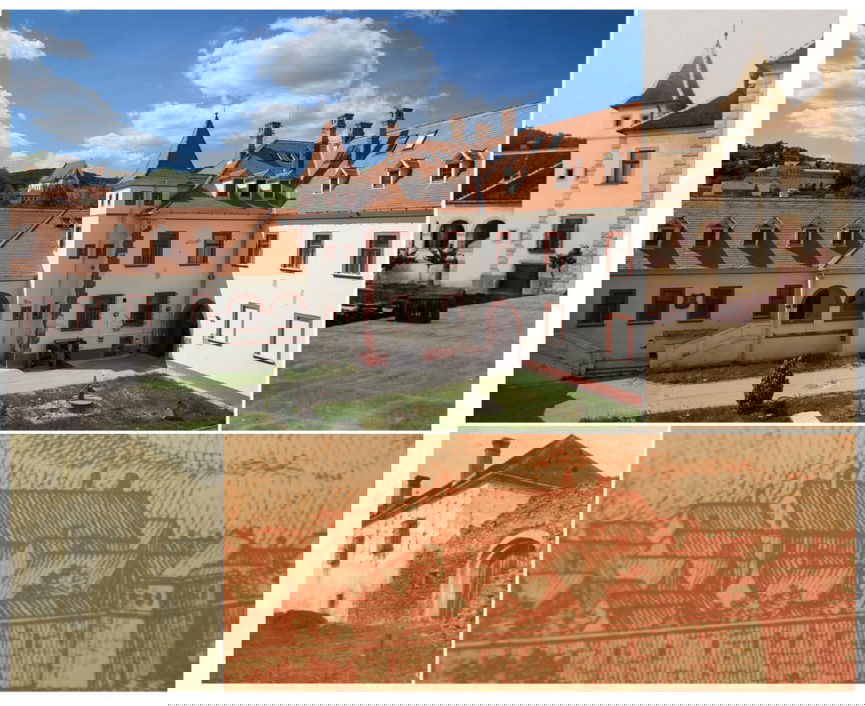
Kaštieľ Pálffy is not only one of the oldest landmarks of the historic town of Svätý Jur, but also an important part of its more than 700-year winemaking tradition. However, it did not always take the form of a manor. Historical sources recall it rather as a “manorial” or “royal” curia, with a garden and vineyards adjoining it.
Its present appearance is the result of numerous building alterations. Over the centuries, the manor’s reconstruction and modernisation were also necessitated by devastating events such as Rákóczi’s uprising or a fire,
after which it was left in a dilapidated state and looked like a ruin.

1543
1566 - 1582
16th century
1602
1608
1609
18. stor.
1907
1963
2020
2021
from 2024
1543
First documented owner
Its oldest documented owner is considered to be the nobleman and scholar ŠIMON CAYRO.
His person has been identified with the writer Šimon Cayro de Saluzis, a nobleman of probably Savoyard origin, who in the mid-16th century worked in the service of the Bratislava governor Ján Szalay. It has not yet been possible to determine when and how he acquired the manor house forming the core of the current manor house. There are no written records of this. Since he was originally a foreigner, he most likely bought it from a local nobleman or burgher sometime before 1543.
Read more
1566 - 1582
Collateral owners
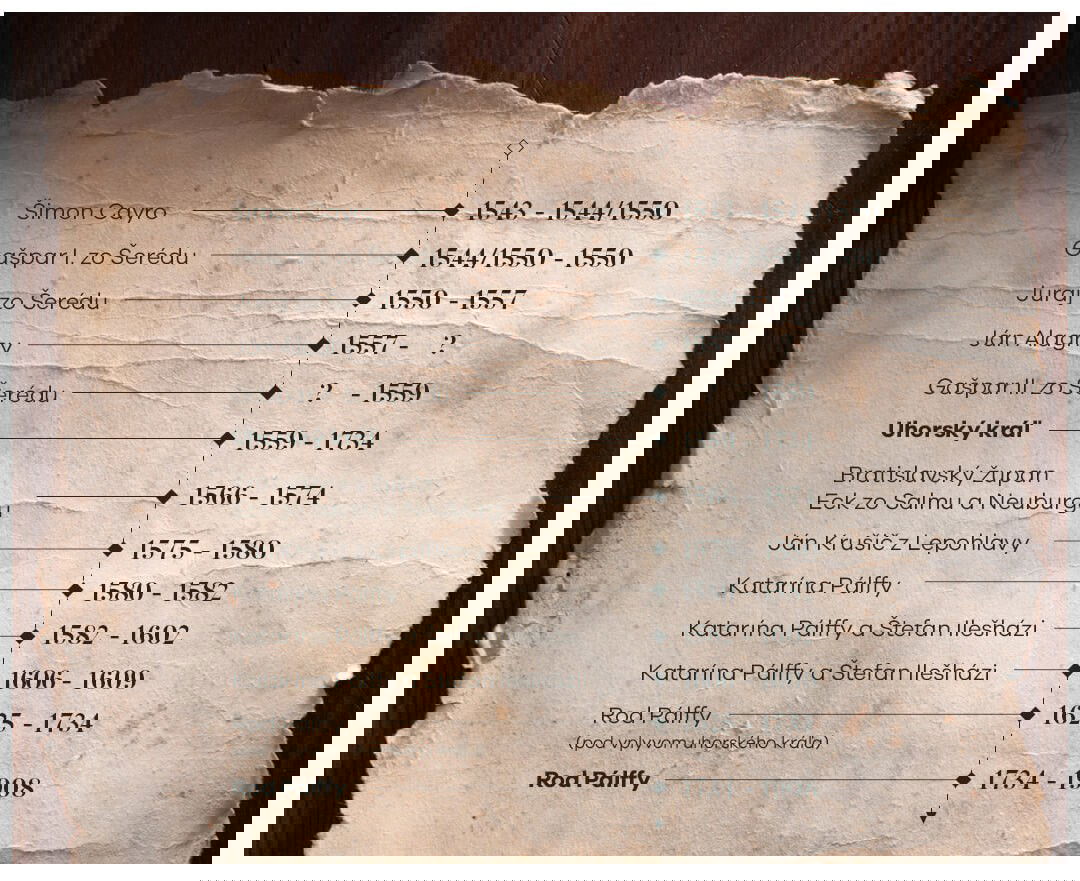
The Pálffy Manor House was used for intensive production, storage and tapping of Svätý Jur wine, which was considered the best in the entire Bratislava County. Trading in the renowned wine represented a significant source of finance for the imperial treasury, which is why the Svätý Jur manor and the town were the property of Emperor Ferdinand I of Habsburg at that time. The plundering of the imperial treasury caused by the wars with the Ottomans forced Ferdinand I to grant Svätý Jur as a pledge to a nobleman in exchange for a financial loan. The first pledge owner of the town and therefore of the royal manor was the Bratislava county governor Eck of Salm and Neuburg in 1566. After his death in 1575, the Croatian nobleman Ján Krušič of Lepohlava became the new pledge owner of the town and the manor. Before the end of his life, Krušič rebuilt not only the manor house in Svätý Jur, but also the castle in Pezinok. Unfortunately, he did not live to see the final reconstruction. After Krušič's death, the pledged royal estates passed into the hands of his widow Katárína Pálffy and through her in 1582 into the hands of her new husband Štefan Ilešházi.
Read more
16th century
Wine made Svätý Jur famous throughout the monarchy
In the busy 16th and 17th centuries, Svätý Jur experienced a “golden age”.
Its elevation to a free royal city confirmed the old rights of the townspeople and granted new privileges that were to ensure development and prosperity. It brought the townspeople funds to finance the administration of the town and also to build the city walls and gates.
Svätý Jur has been associated with the production of wine since time immemorial, which was popular throughout Hungary. Svätojurský samotok, together with Tokaj and Šopron wines, were declared the three most important wines in the entire monarchy. The Hungarian king even exercised the right to tap 5,500 liters of this noble liquid in the manor. Wine has been produced, stored and tapped in the historic manor house for CENTURIES.
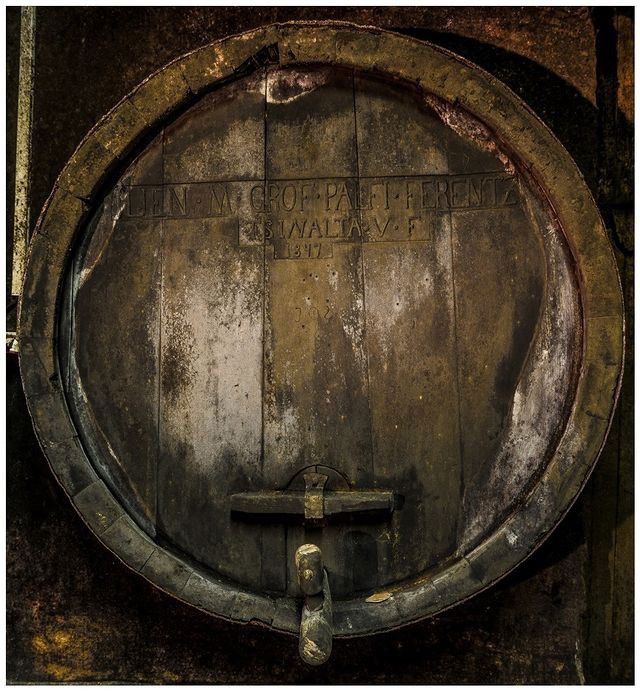
The evidence is also preserved wooden barrels from the 19th century, on which the name of one of the last owners of the manor house, Count Ján Pálffy, stands out. The deeply rooted winemaking tradition is continued by the VIAJUR winery, which is located in the historic cellars of the manor house.
RARE FINDS IN THE HISTORIC MANOR BUILDING
Archaeological research has recently uncovered sites of significant historical value in the Pálffy manor house. A preserved WELL was found in the building, whose origins date back to the 16th century. Interestingly, it still holds water, which ensures ideal climatic conditions for the maturation of VIAJUR wine in wooden barrels. Archaeologists have also discovered the site of a GRAPE PRESS and an ICE CHAMBER, which was used to store food. These are tangible evidence of the winemaking tradition that has been passed down from generation to generation and can still be admired today.
Read more
Svätý Jur has been associated with the production of wine since time immemorial, which was popular throughout Hungary. Svätojurský samotok, together with Tokaj and Šopron wines, were declared the three most important wines in the entire monarchy. The Hungarian king even exercised the right to tap 5,500 liters of this noble liquid in the manor. Wine has been produced, stored and tapped in the historic manor house for CENTURIES.
The evidence is also preserved wooden barrels from the 19th century, on which the name of one of the last owners of the manor house, Count Ján Pálffy, stands out. The deeply rooted winemaking tradition is continued by the VIAJUR winery, which is located in the historic cellars of the manor house.
RARE FINDS IN THE HISTORIC MANOR BUILDING
Archaeological research has recently uncovered sites of significant historical value in the Pálffy manor house. A preserved WELL was found in the building, whose origins date back to the 16th century. Interestingly, it still holds water, which ensures ideal climatic conditions for the maturation of VIAJUR wine in wooden barrels. Archaeologists have also discovered the site of a GRAPE PRESS and an ICE CHAMBER, which was used to store food. These are tangible evidence of the winemaking tradition that has been passed down from generation to generation and can still be admired today.
1602
Fatal years
The manor house in Svätý Jur with its adjacent garden and vineyards became dear to Katarína Pálffy and Štefan Ilešházy. However, the ambitious Illésházy became a thorn in the side of the Svätý Jur and Pezinok squires. The burghers of Svätý Jur also openly expressed their dislike for Štefan. They raised the necessary sum on their own to redeem themselves from their debts and free themselves from Ilešházy's authority.
The bad rumors reached the royal court. King Rudolf II. heard the complaints of the burghers and in 1602, after the expiration of the "contract" with Ilešházy, he deprived the couple of the manor house.
However, Katarína did not intend to give up the pledged property so easily. The situation escalated to the point that in 1603 Stephen was accused of insulting the king and sentenced to the loss of his property and life.
Illésházy escaped by fleeing to Poland, after which an anti-Habsburg uprising of the Hungarian nobility broke out. Letters from the period of difficult political struggles document how Catherine fought fiercely for the St. George's Castle.
Read more
However, Katarína did not intend to give up the pledged property so easily. The situation escalated to the point that in 1603 Stephen was accused of insulting the king and sentenced to the loss of his property and life.
Illésházy escaped by fleeing to Poland, after which an anti-Habsburg uprising of the Hungarian nobility broke out. Letters from the period of difficult political struggles document how Catherine fought fiercely for the St. George's Castle.
1608
Honorable Ms. Jura – Katarína Pálffyová
Katarína Pálffy was a very enlightened and determined woman, who was one of the prominent female figures in the history of St. George. Thanks to her strong determination, the manor house remained in the possession of her family despite power struggles and intrigues. Together with her husband, later the Hungarian Palatine Štefan Ilešházi, she embarked on the reconstruction of the manor house, which she persistently continued even after his death.
In the hands of Katarína Pálffy and Štefan Ilešházi, the manor house achieved an unprecedented FLOURISHING. In the years 1608 to 1609, the couple managed to resume the reconstruction of the building and transform it into a Renaissance residence.
However, the couple did not have time to enjoy the renovated premises together. The completion of the St. George manor house was accompanied by a sad event, namely the death of Štefan Ilešházi. Katarina was deeply affected by the loss of her beloved husband: "Possessions pass away, wine is drunk. But love does not perish."
Read more
In the hands of Katarína Pálffy and Štefan Ilešházi, the manor house achieved an unprecedented FLOURISHING. In the years 1608 to 1609, the couple managed to resume the reconstruction of the building and transform it into a Renaissance residence.
However, the couple did not have time to enjoy the renovated premises together. The completion of the St. George manor house was accompanied by a sad event, namely the death of Štefan Ilešházi. Katarina was deeply affected by the loss of her beloved husband: "Possessions pass away, wine is drunk. But love does not perish."
1609
The past remained forever engraved in the walls of the Pálffy Castle
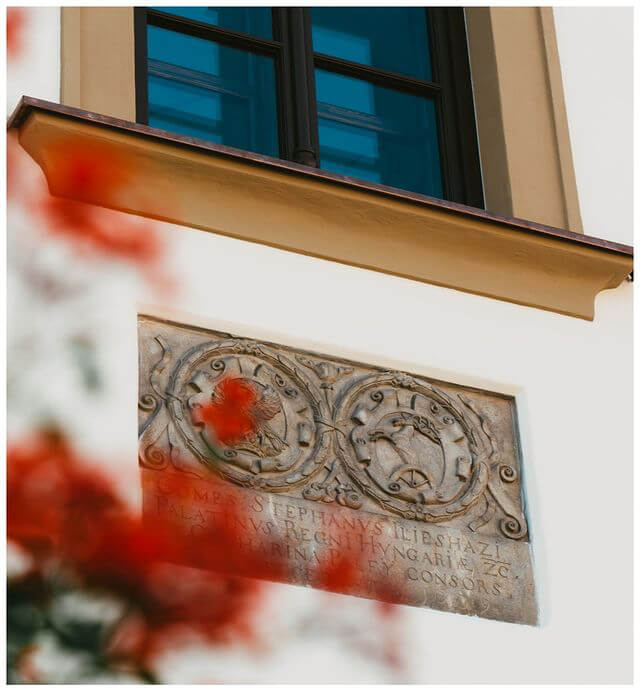
King Charles VI. took into account the loyalty and services of the Pálffys and in 1734 granted the Svätý Jur and Pezinok estates to Counts Ján, František, Mikuláš, Leopold and Rudolf as permanent possession, as well as to their descendants. The Pálffy family continued to improve the manor and take care of the legacy of Štefan Illésházy and Katarína Pálffy, who left deep traces in it. One of the tangible imprints can be admired above the portal on the right side of the manor courtyard, which is decorated with a relief stone with the coats of arms of Illésházy and his wife from 1609, when the reconstruction of the manor into a Renaissance residence was completed. You can decipher the following text on it:
Comes Stephanus Ilieshazi palatinus regni Hungariae etc. et Catharina Palfy consors fecerunt 1609.
Read more
18. stor.
What did it look like in the Pálffy Manor at the end of the 18th century?
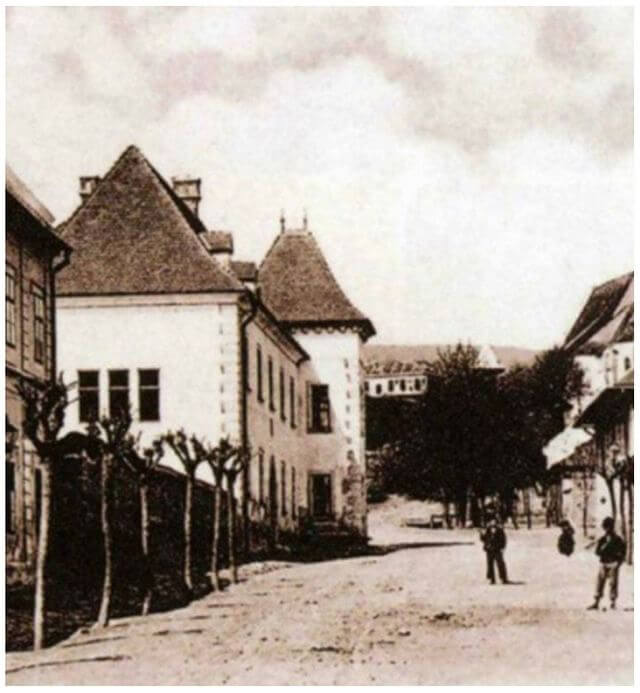
In the hands of the Pálffy family, the manor house was a bustling place. However, you would not experience exuberant celebrations of the nobility or lavish social events here.
The Pálffys permanently rented out a large part of the living space. In 1798, the manor house was inhabited by the manor's forester, the winegrower, the innkeeper, two butchers, a retired officer and the manor's steward together with their families.
In the large cellar, wine rested in wooden barrels, and in the adjacent rooms, the owners of the manor house, Rudolf and Ján Pálffy, stored their wine. Both also owned presses in which grapes were pressed. In the second part of the manor house, there was a beer tap, which was a thorn in the side of the townspeople, who were bothered by its competition. However, the right to tap beer and wine remained in the hands of the Pálffys even after the townspeople's protests.
The grounds included a large stable with a double gate, which was used to house the estate's oxen during the grape harvest. In the manor's courtyard stood a distillery with the necessary equipment.
Read more
1963
The mansion boasts the status of a national cultural monument.
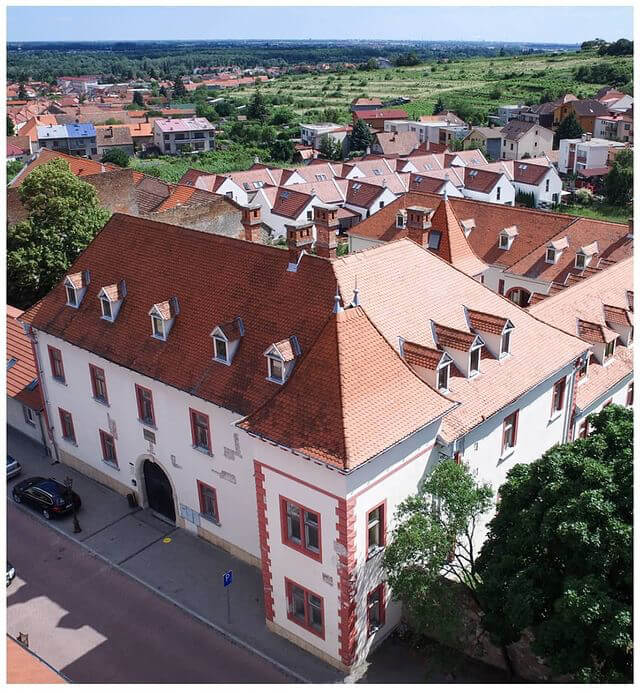
The jewel of St. George gained national significance when it was listed as a national cultural monument on July 17, 1963.
This happened at a time when its premises, converted into rental apartments, were used by the Housing Administration of the National Museum of the Slovak Republic. The facade and roof of the mansion were still marked by war damage, which inevitably required repair.
HOW SOCIALISM CHANGED THE FACE OF THE MANSION
The historical value of the Pálffy Mansion was degraded during the 20th century. The building was transferred to the administration of the National Museum of the Slovak Republic, which had the interior converted into rental apartments. The mansion received a new coat of paint in 1967. The facade, external plaster, window and door coatings, and the grooved roof covering were restored, and all chimneys were demolished and rebuilt.
The construction work continued in the 1980s. Gas and water pipes were installed in the manor house and the tenants were able to see the construction of a sewage system. Part of the building was used by the United Farmers' Cooperative, which led to several conflicts with the tenants, which were mainly caused by the movement of heavy machinery damaging the courtyard.
In the 1990s, the JRD took over the manor house and subsequently carried out a reconstruction, which was carried out very insensitively and left devastating traces on the Pálffy Manor House. Its premises were converted into offices and part of the building belonged to a guesthouse. The historical story of the manor house, marked mainly by the fate of the powerful noble family of the Pálffys, seemed to have disappeared in time. But not forever.
Read more
HOW SOCIALISM CHANGED THE FACE OF THE MANSION
The historical value of the Pálffy Mansion was degraded during the 20th century. The building was transferred to the administration of the National Museum of the Slovak Republic, which had the interior converted into rental apartments. The mansion received a new coat of paint in 1967. The facade, external plaster, window and door coatings, and the grooved roof covering were restored, and all chimneys were demolished and rebuilt.
The construction work continued in the 1980s. Gas and water pipes were installed in the manor house and the tenants were able to see the construction of a sewage system. Part of the building was used by the United Farmers' Cooperative, which led to several conflicts with the tenants, which were mainly caused by the movement of heavy machinery damaging the courtyard.
In the 1990s, the JRD took over the manor house and subsequently carried out a reconstruction, which was carried out very insensitively and left devastating traces on the Pálffy Manor House. Its premises were converted into offices and part of the building belonged to a guesthouse. The historical story of the manor house, marked mainly by the fate of the powerful noble family of the Pálffys, seemed to have disappeared in time. But not forever.
2020
2020
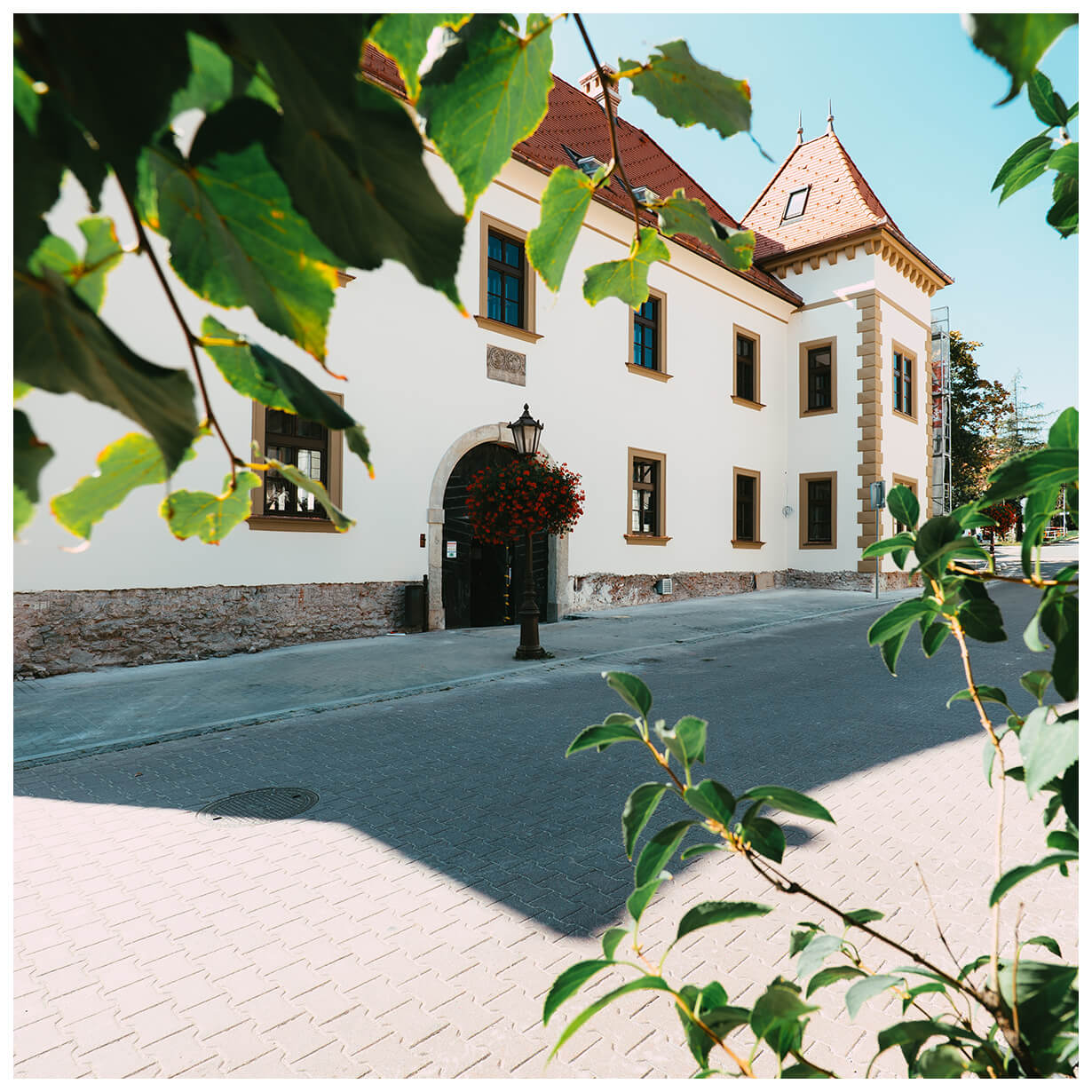
The almost forgotten beauty that noble noble families instilled in the manor house is coming back to life.
The Renaissance manor house is once again the pride of the town of Svätý Jur and, in addition to its beautiful silhouette, which gives Svätý Jur a unique character, it also brings to the present a piece of winemaking history and tradition of the Pálffy wine cellars that has been shrouded in time. These cellars hide centuries of honest winemaking work and art, which are now being exploited by the VIAJUR winery.
Viticulture and winemaking VIAJUR continue the traditions that have been hidden in the story of the Pálffy cellars for generations. The VIAJUR winery manages vineyards and grows grapes in two estates – Svätý Jur and Farná. The wine production itself has returned to the historic Pálffy cellars. We remain faithful to the traditional, age-old winemaking, which we improve with modern technologies. The pride of our winery is the Juraský (Rhine) Riesling, which contains the terroir of the famous Svätý Jur wine-growing region.
Read more
2021
2021
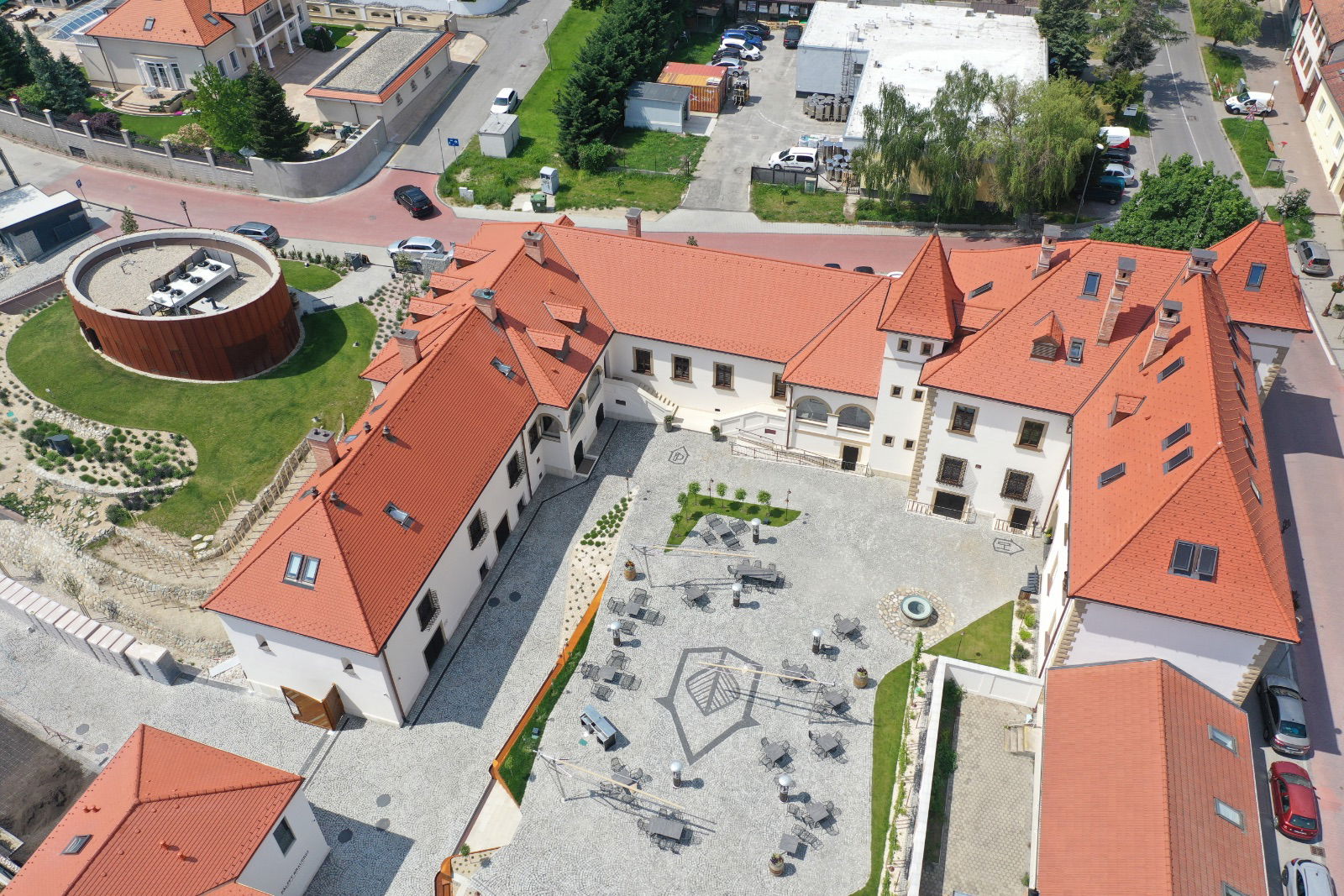
History comes to life again and the famous lady of Svätý Jur, Katarína Pálffy, together with her husband Štefan Ilešházy, are imaginatively opening the gates of the sensitively renovated Pálffy Manor in Svätý Jur. Their favorite Svätý Jur residence has undergone a complete reconstruction and is once again receiving its noble historical appearance. Katarína Pálffy invites her guests to visit the Palatín Restaurant, which has found its place under the Renaissance vaults of the oldest part of the manor. In the connecting wing, you will be enchanted by the magnificent Pro Rege et Patria hall. Its walls are decorated with portraits of members of the Habsburg family, as well as original paintings of scenes from the Thirty Years' War and the War of the Habsburg Succession.
In the youngest wing of the manor, which was renovated by the Pálffys in the neo-romantic style, you ascend an impressive, preserved staircase, with a beautiful chandelier as a dominant feature, to the Habsburg Salon.
The manor also became the seat of the VIAJUR winery. It is located in the historic Pálffy cellars from the 16th century, but also in modern premises, completed as part of the reconstruction of the manor.
The tradition of brewing beer is continued by the Pálffy Brauerei craft brewery, which is located directly in the courtyard of the manor.
The mistress of the house, Katarína Pálffy, welcomes you with a quote from her letter to Štefan: "Possessions pass away, wine is drunk, but love does not perish."
Read more
In the youngest wing of the manor, which was renovated by the Pálffys in the neo-romantic style, you ascend an impressive, preserved staircase, with a beautiful chandelier as a dominant feature, to the Habsburg Salon.
The manor also became the seat of the VIAJUR winery. It is located in the historic Pálffy cellars from the 16th century, but also in modern premises, completed as part of the reconstruction of the manor.
The tradition of brewing beer is continued by the Pálffy Brauerei craft brewery, which is located directly in the courtyard of the manor.
The mistress of the house, Katarína Pálffy, welcomes you with a quote from her letter to Štefan: "Possessions pass away, wine is drunk, but love does not perish."
from 2024
from 2024
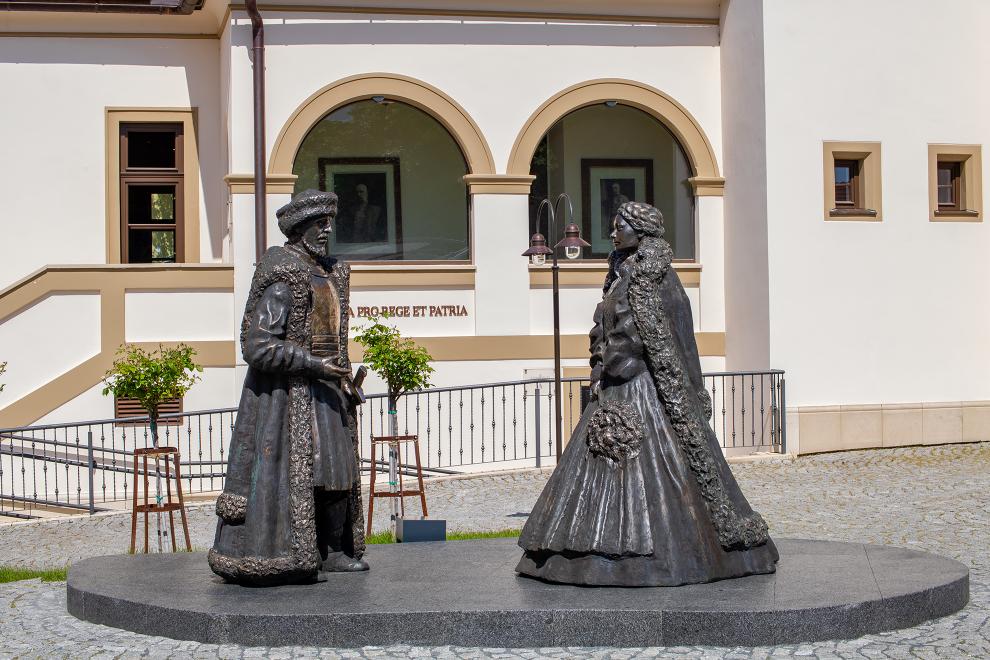
The love story in the courtyard of the Pálffy Manor comes to life.
Katarína Pálffy and Štefan Ilešházi survived long separations and difficult trials during their lives, but their love has always remained as strong and fresh as in the beginning. The beautiful love story of Katarína and Štefan is now coming to life again in the courtyard of the Pálffy Manor, where they stand side by side, just as they did during their lives. Štefan with a saber in his hand, a symbol of their strong feeling, which has overcome all separations, and Katarína with a fan, a symbol of the fresh breeze that has always blown in their relationship. And legend has it that anyone who comes to the statues of our patrons and strokes the saber and fan, their love will forever remain just as strong and still full of life.
Read more
Katarína Pálffy and Štefan Ilešházi survived long separations and difficult trials during their lives, but their love has always remained as strong and fresh as in the beginning. The beautiful love story of Katarína and Štefan is now coming to life again in the courtyard of the Pálffy Manor, where they stand side by side, just as they did during their lives. Štefan with a saber in his hand, a symbol of their strong feeling, which has overcome all separations, and Katarína with a fan, a symbol of the fresh breeze that has always blown in their relationship. And legend has it that anyone who comes to the statues of our patrons and strokes the saber and fan, their love will forever remain just as strong and still full of life.